Playing with Chaos
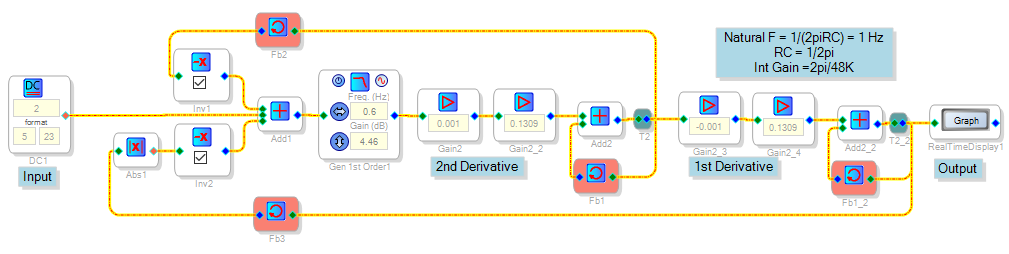
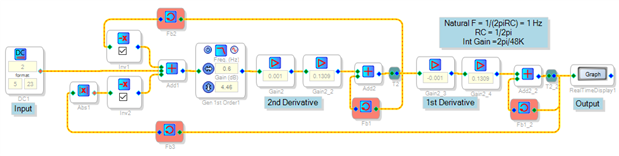
Chaos theory, that is. This interesting branch of mathematics describes why a system's behavior can appear random and unpredictable, despite its being quite deterministic. Wikipedia's entry features several examples of chaotic systems -- one of which is an electronic circuit consisting of op-amps, resistors, caps, and diodes. As it turns out, this circuit is easily translated into SigmaDSP blocks, which can run on a ADAU1701:
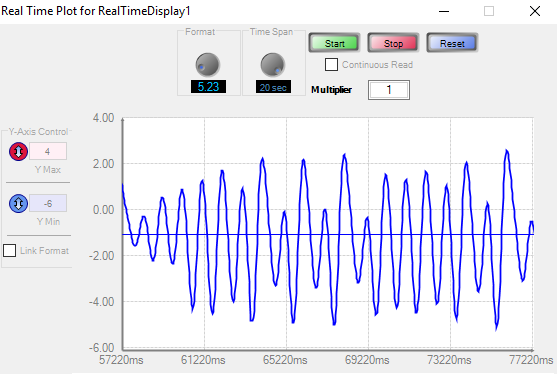
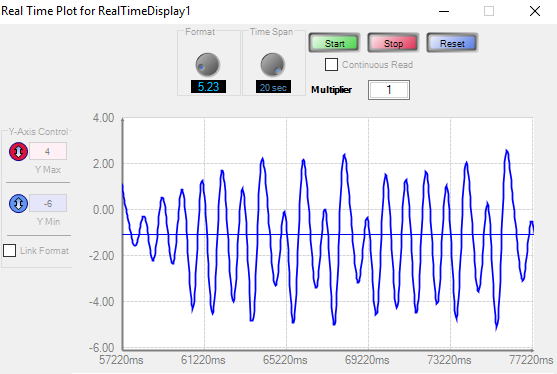
It amounts to a lowpass filter with gain, two integrators, and an absolute value standing in for the diodes. It solves a third-order, nonlinear differential equation (can anyone say, "analog computer" -- yes, sometimes I feel as old as my avatar!). With the right amount of gain this goes chaotic, resulting in an output like this one:
Chaos theory explains why we can hardly predict the weather beyond about one week, even with sophisticated computer models programmed with known laws of physics. And why Jurassic Park was doomed to terrible failure.
Audio Signal Processors
SigmaDSP Audio Processors
adau1701
Just for fun, I connected three VCOs to various points in this thing and recorded the result. About 10 seconds in, I reduced the driving DC source from 2.0 to 1.8 -- this pushed the system into a locked, irrecoverable state. You'll hear one last sweep, then the sound fades away. The effect reminds me of early Sci-fi movies (of course, back then to make sounds like these with vacuum-tube circuitry was quite a heroic feat).
t's the sound of Chaos . sounds cool Bob.
Hello Bob,
You made me smile with this post! I am old enough to remember analog computers as well!
So is this circuit a candidate for the longest and most instruction intensive way to come up with a random number generator? LOL
Dave T
Hello Dave,
Yes, it's a bit much to produce randomness. Only chaos is even worse than random -- a slight provocation, and the thing departs to Mars. Sounds like it, too.
Please log in to reply.